
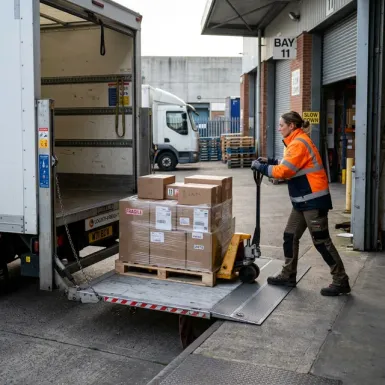
The Power of Tail Lifts & Manual Pump Trucks
In the world of modern logistics and delivery, missing a loading dock shouldn't mean missing a delivery. The combination of a hydraulic tail lift (liftgate) and a manual pump truck (pallet jack) is the ultimate solution that enables heavy pallets to be loaded and unloaded seamlessly at ground level.
Watch the Demo: Liftgate in Action
To visualize how these tools work together for an efficient delivery, watch this short demonstration. It shows a single operator navigating loaded pallets safely from a truck bed down to the pavement using the liftgate.
Safety and Compliance Standards
Operating a tail lift or manual pallet jack falls under strict safety regulations, such as PUWER (Provision and Use of Work Equipment Regulations) and general Manual Handling Guidelines (monitored by the HSE in the UK). Proper training for operators ensures legal compliance, minimizes injury risks, and protects loaded goods from damage.
The Pre-Operation Checklist
Before initiating any lift, operators must perform essential safety checks on both devices:
1. Tail Lift Inspection
- Warning Systems: Test that flashing lights, audio warnings, and safety gates are functional.
- Hydraulics Checklist: Visually inspect beneath the platform for any traces of oil leaks.
- Platform Integrity: Ensure the tail lift surface is clear of grease, ice, or debris that could cause slips or wheel skids.
2. Manual Pump Truck Check
- Wheel Operations: Verify load wheels roll smoothly without trapped debris or plastic film wrap.
- Tiller Handle: Test the drop lever and trigger release into all three positions (Lift, Neutral, Lower).
Safe Operations & Handling on the Lift
To maintain absolute safety when moving loads between the truck bed and ground level, adhere to these standard protocols:
| Operational Phase | Safety Best Practice |
|---|---|
| Positioning on the Deck | Center the pallet on the tail lift platform. Always turn load wheels inside safety stops/lip locks to prevent runaway motion. |
| The Lowering Cycle | Maintain a clear line of sight around the descending deck. Beware of crush hazards for toes and lower limbs at floor level. |
| Safe Loading Weights | Never exceed the Safe Working Load (SWL) specified on the tail-lift manufacturer plate. |
Optimal Ergonomics: Push, Don't Pull
When wheeling pallets off the liftgate and onto the delivery zone, biomechanics support pushing rather than pulling. Pushing utilises your core and quadriceps, whereas pulling loads the lower back and increases the risk of a foot being run over by the load wheels. Maintain smooth, controlled speeds for absolute stability.
Conclusion
When utilized correctly following structured checklists and safety procedures, tail lifts and manual pump trucks offer a versatile and secure method for overcoming loading dock-less shipping routes. Implementing these safe operation routines turns a complex task into a daily streamlined procedure.