
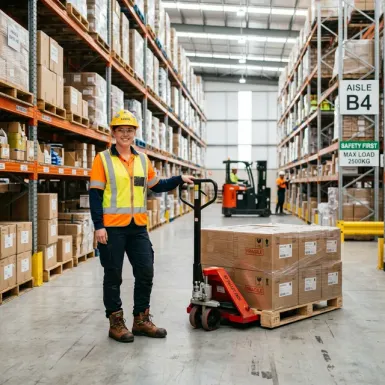
Safety: The Foundation of Warehouse Efficiency
In any fast-paced warehouse or retail environment, pallet truck safety is not just a regulatory requirement—it is a cornerstone of operational success. While a hand pallet truck (or pallet jack) might seem simple to operate, mishandling one can lead to serious injuries, including foot trauma and debilitating back strain. This guide provides a comprehensive breakdown of how to master pallet truck safety.
Essential Training Video: Master the Pallet Jack
Visualizing proper technique is the best way to learn. Watch this comprehensive training video which identifies key parts of the truck and demonstrates the safest ways to move heavy loads.
Step-by-Step Operating Instructions
To ensure pallet truck safety, every operator should follow these standard operating procedures derived from industry best practices.
1. Pre-Use Inspection (Your First Line of Defense)
Before every shift, perform a quick visual check. Familiarize yourself with the core components shown below to ensure everything is in working order.
Figure 1: Labeled components for daily safety inspection.
- Hydraulics: Check for any leaks under the frame or around the valves.
- Wheels: Ensure they roll freely and are not blocked by debris, plastic wrap, or flat spots.
- Forks: Verify they are straight, level, and free from structural cracks or bending.
- Brakes: If your model has them, test the braking function before moving a load.
2. Loading and Lifting
Proper load distribution is key to stability:
- Center the Load: Position the forks evenly under the pallet and ensure they are fully inserted. The back of the forks should be flush against the pallet edge.
- Mind the Capacity: Never exceed the manufacturer's rated weight limit (usually found on the nameplate). Overloading is a major cause of hydraulic failure and tipping accidents.
- Lift Just Enough: Pump the handle until the pallet is 1-2 inches off the ground. Lifting too high increases the risk of the load shifting and raises the center of gravity.
3. The Golden Rule: Push, Don't Pull
Ergonomics play a massive role in pallet truck safety. Safety experts strongly recommend pushing the pallet truck whenever possible.
Figure 2: Pushing utilizes leg power and maintains a straight spine, reducing injury risk.
Pushing engages your stronger leg muscles and core, whereas pulling can lead to sudden twisting of the spine and acute lower back strain, especially when starting a heavy load from a standstill.
Risk Assessment & Hazard Management
Before moving any load, a quick risk assessment of your environment is crucial:
- Environment: Scan for obstacles, spills, or uneven flooring that can destabilize the truck.
- Trailers & Docks: If loading onto a trailer, ensure it is locked in place and the floor can support the combined weight of the truck and load.
- Pedestrians: Maintain a controlled walking pace. Use horn signals or verbal warnings when approaching blind corners.
- PPE: Essential gear includes steel-toed boots, high-visibility vests, and hard hats in designated zones.
Daily Safety Checklist
Incorporate these checks into your daily routine to sustain a high standard of workplace safety:
| Checklist Item | Action Required |
|---|---|
| Visual Inspection | Check for leaks, bent forks, or wheel damage. |
| Handle Function | Ensure the tiller handle moves smoothly in all positions. |
| Hydraulic Lift | Test lift and release mechanism without a load. |
| Lubrication | Confirm moving parts are well-greased (monthly task). |
Conclusion
By prioritizing pallet truck safety and incorporating these checklists and ergonomic techniques, you protect yourself and your colleagues from avoidable accidents. Remember: workplace safety is a continuous commitment, not a one-time check. implement these tips today!